Kutch, stories in every stitch.
Beyond the salt-white landscape is a world of colour. Spend a day learning to read it, from community embroidery traditions to a conversation with the person behind a textile.
Michel Cecil / Wikimedia Commons · CC BY-SA 4.0 · converted to JPEG; resized; layout crops applied.
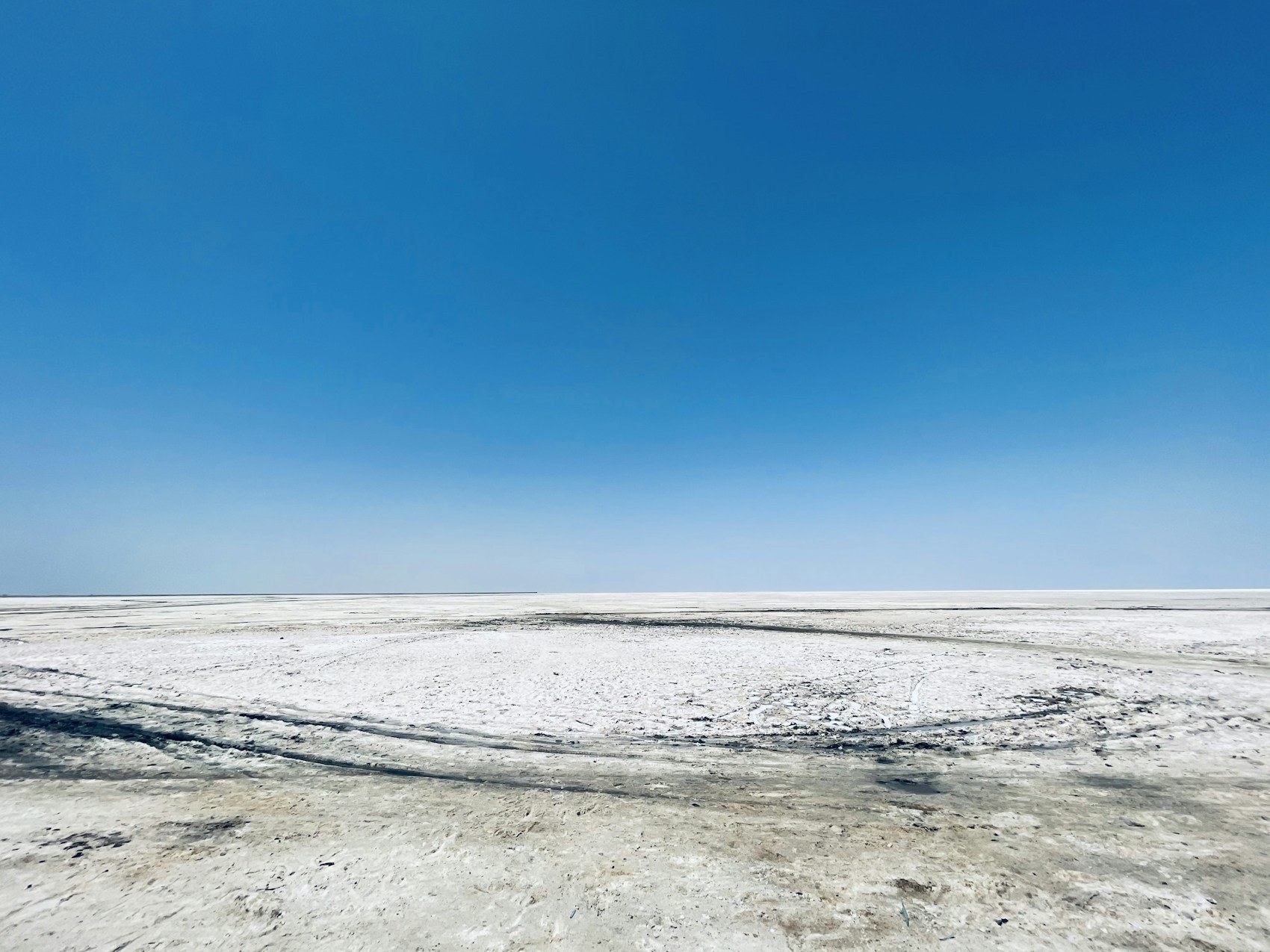
The White Rann gives you an extraordinary horizon. A textile brings your attention back to something small: a stitch, a colour, a choice repeated patiently across cloth. A good Kutch journey has room for both scales.
Give the craft day its own place in the itinerary. Base it around Bhuj, choose a point of introduction and arrange any maker visit in advance. The reward is an understanding you can carry back to the landscape, as well as an object you might carry home.
There is no single Kutch stitch
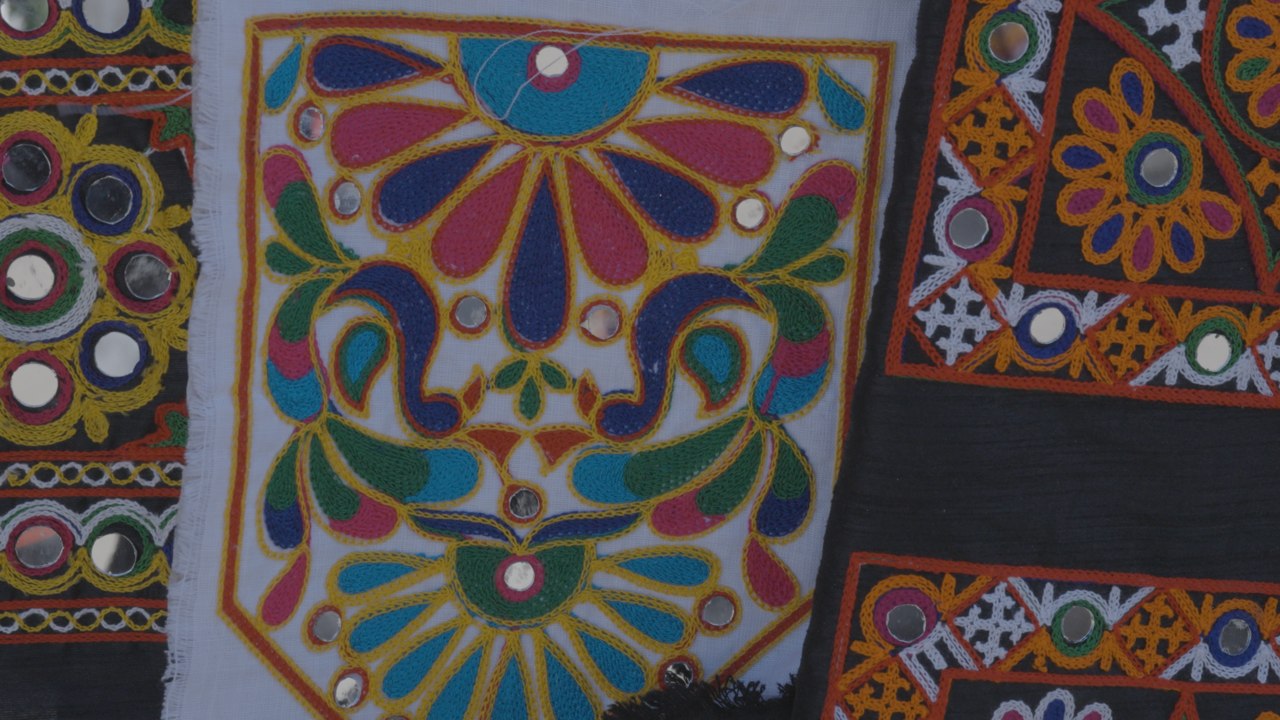
Khamir, the region’s craft organisation, describes embroidery traditions that differ between communities, including Jat, Ahir, Rabari and Soof. Stitches and motifs can express community identity as well as individual skill. Treat that variety as the beginning of a conversation; a bright surface is not the whole story of a textile. [1]
Ask what the maker calls the work, how the pattern is developed and which parts take the most time. Avoid trying to identify a community from appearance alone. A good host can explain the context with more care than a passing visitor can infer it. Listen before comparing, and let the maker decide what they wish to share.
“Look closely enough, and the souvenir becomes a conversation.”
Start with a little context
Shrujan’s Living and Learning Design Centre, or LLDC, at Ajrakhpur is a useful first stop to research. Its museum describes galleries devoted to Kutch’s embroidery, including traditional pieces, commissioned work and contemporary expression. Check the current exhibition and visitor arrangements directly; the point is to arrive at your next conversation with better questions. [2]
Take your time with a small number of pieces. Look at how a border changes the whole composition, how a repeated motif moves across a panel and how different materials meet. If you are travelling with children or someone who prefers a shorter visit, plan a clear meeting point and a comfortable break.
Meet a working craft landscape
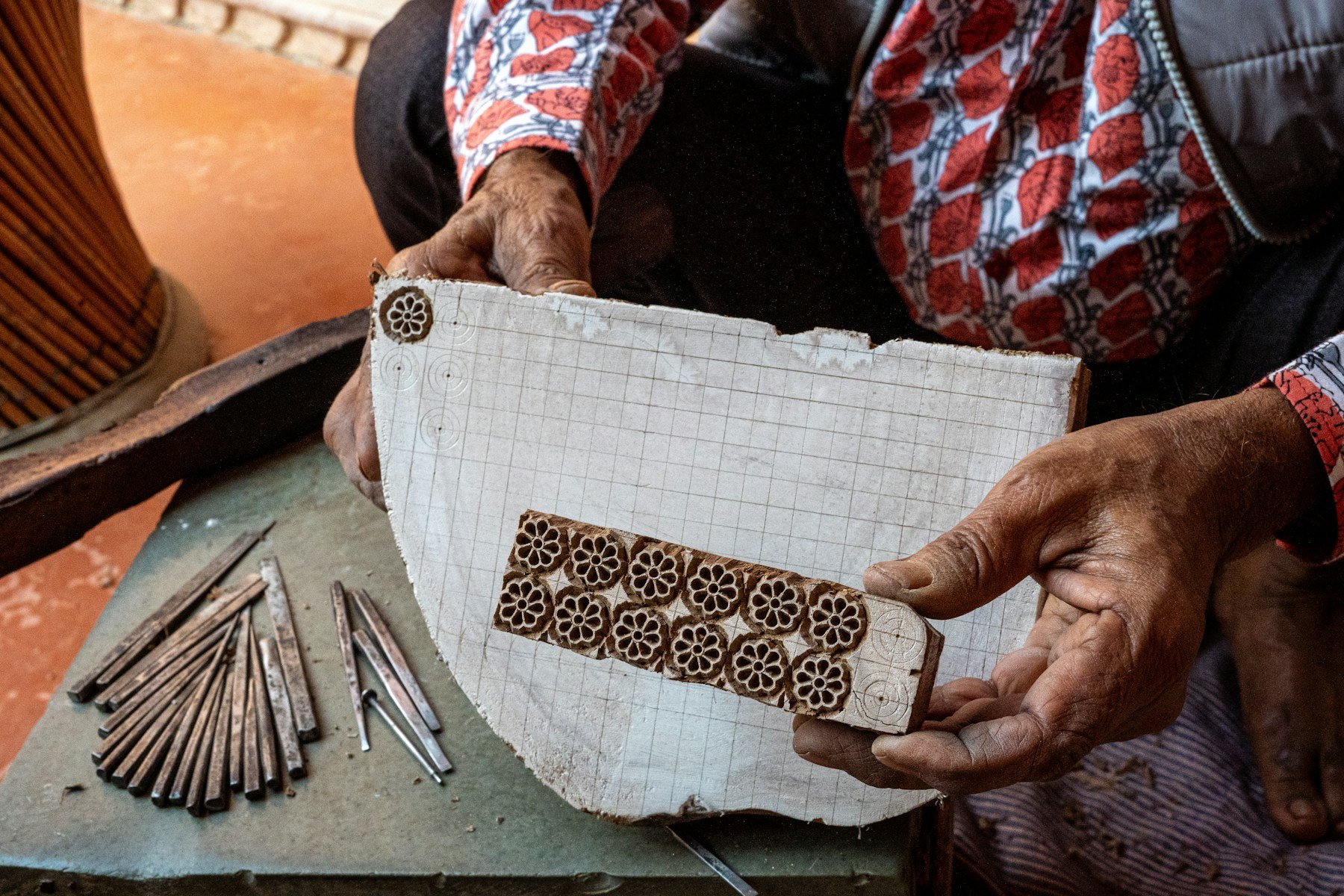
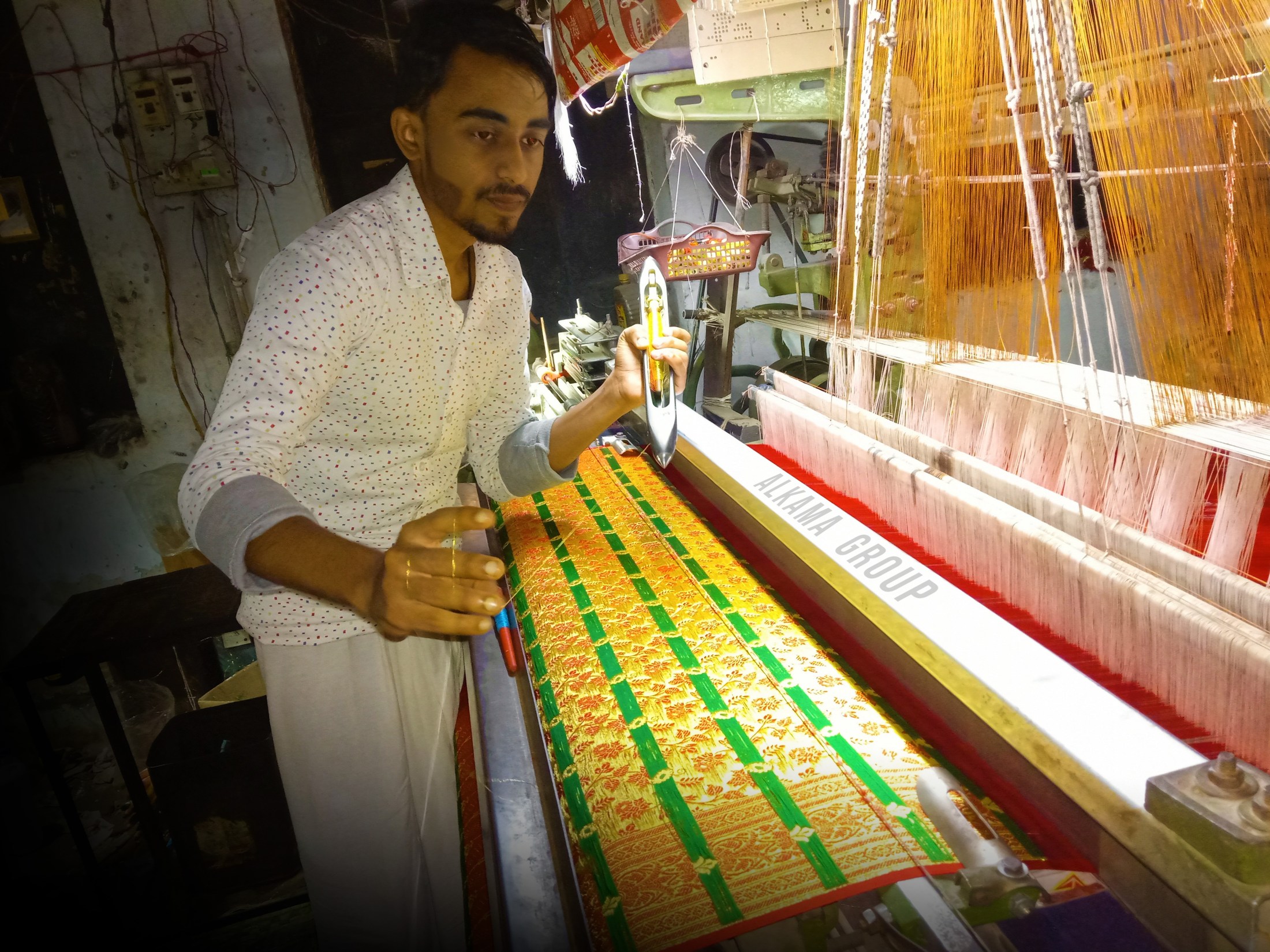
Khamir’s campus near Kukma is another point of introduction. The organisation welcomes visitors and publishes regular Monday–Saturday opening of 10am–6pm. Its craft work extends beyond embroidery into weaving, printing and other materials. Contact the team to understand what is actually happening during your visit, especially over festival dates. [3]
Choose one confirmed visit rather than an ambitious list of villages. A workshop is a place of work, and a home is not an attraction with guaranteed opening hours. Agree the length, language support, fee and photography permissions before arriving. If a demonstration has been arranged for you, ask how the maker is being paid.
A purchase with a name attached
Ask who made the piece, what the base cloth and threads are, whether it is new or vintage, and how repairs or cleaning should be handled. If someone describes a piece as handmade, ask them to explain the process. Keep the maker’s name and an itemised receipt with your purchase.
Set a budget that allows you to buy one thing properly. Do not assume the story of a textile is included in the price of photographing it. Respect a refusal, pay an agreed charge and leave room for the maker’s day to continue. Later, when you unfold the cloth at home, that conversation will give the pattern another dimension.
The suggested itinerary
An editorial itinerary to shape around your dates, pace and reservations.
A confirmed visit to LLDC, with time to look closely at a few pieces rather than rush every display.
A lunch break and a realistic transfer planned around your confirmed afternoon appointment.
Choose Khamir or one arranged maker visit. Keep a separate day for Dhordo and the White Rann.
Sources & travel notes
- Khamir · embroidery traditions of Kachchh ↗
- Shrujan LLDC · museum and embroidery galleries ↗
- Khamir · visitor information and contact ↗
Research checked 27 October 2026. Routes are editorial suggestions; hotel mentions are shortlist ideas, not first-hand reviews or confirmed availability. Check current schedules, prices and entry requirements before booking.